


Anatomy of Fabric Shears: Why Do Fabric Scissors Have Different Handle Shapes?

Have you ever looked closely at a pair of fabric scissors and wondered why the handles are so oddly shaped? One loop is large, the other is small, they aren't symmetrical, and compared to many household scissors, sewing shears can look almost oversized. It turns out every part of that design exists for a reason.
While sharp blades get most of the attention, the handle plays an enormous role in how fabric scissors perform. In many cases, handle design is the difference between a comfortable cutting session and a sore hand after twenty minutes.
Why Are Fabric Scissor Handles Asymmetrical?
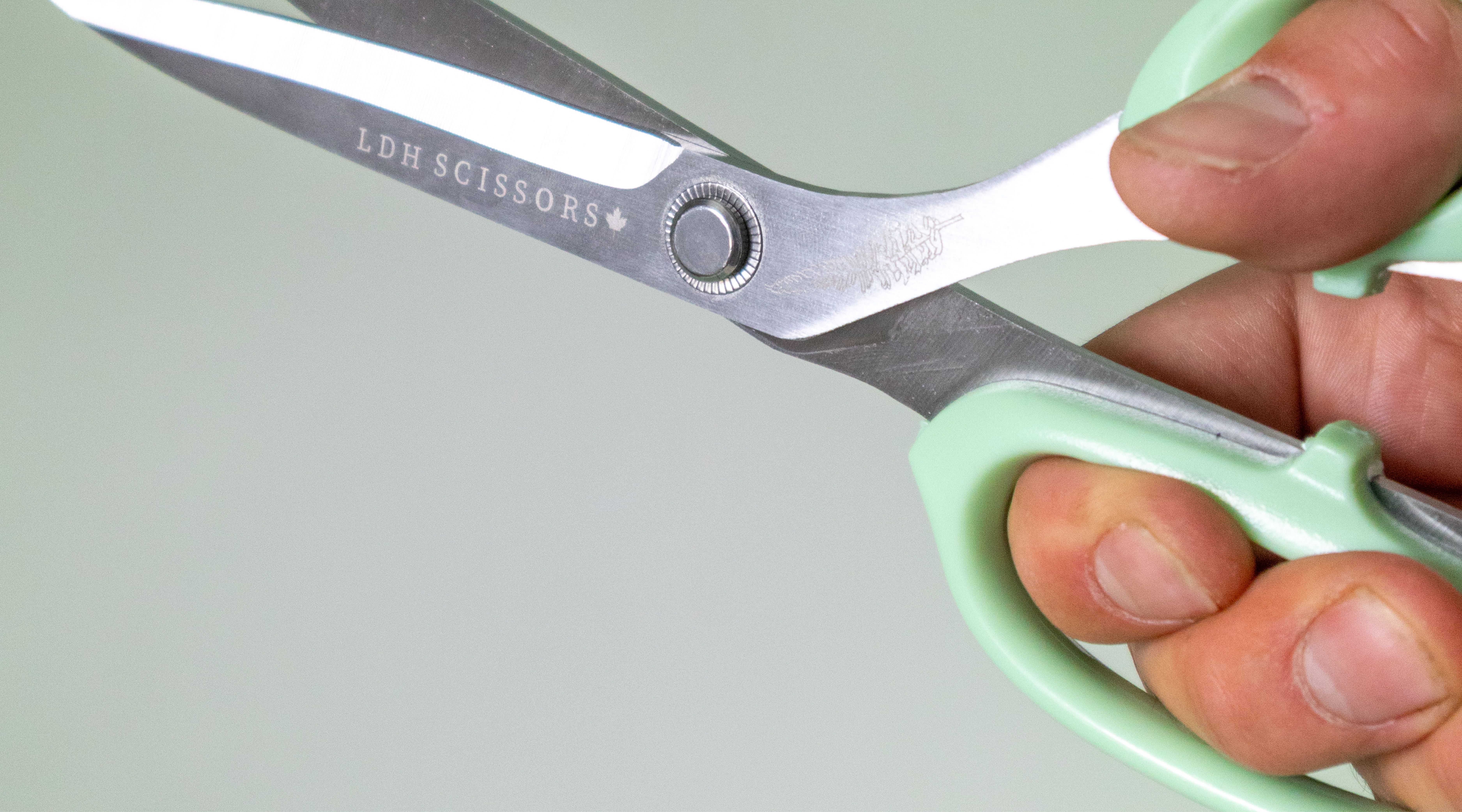
One of the most recognizable features of fabric shears is the oversized lower handle. Unlike smaller scissors that are designed for lightweight materials such as paper or thread, fabric shears are built to generate power and control. The larger handle allows multiple fingers to fit inside comfortably, which may seem like a small detail, but it dramatically changes how force is distributed during cutting.
More Fingers Means More Leverage
Many people assume their thumb provides most of the cutting power. In reality, your other fingers are doing much of the work.
The larger handle on fabric shears allows several fingers to work together, creating significantly more leverage and control than a design that only accommodates one finger.
Think about small embroidery scissors or paper scissors. These tools often feature two similarly sized loops because they're intended for lightweight materials and precision work, but fabric shears have a different job. They're designed to move through multiple layers of fabric, denim, canvas, wool, batting, and other materials that require more force. The larger handle helps make that possible.
Comfort Directly Impacts Cutting Accuracy
When your hand fits comfortably inside a handle, you naturally gain better control. A cramped grip forces your hand to work harder and can lead to:
- Hand fatigue
- Reduced cutting accuracy
- Wrist discomfort
- Inconsistent cutting pressure
The more comfortable your hand feels, the more accurately you can guide the scissors through fabric.
Why Larger Fabric Shears Often Feel Easier to Use
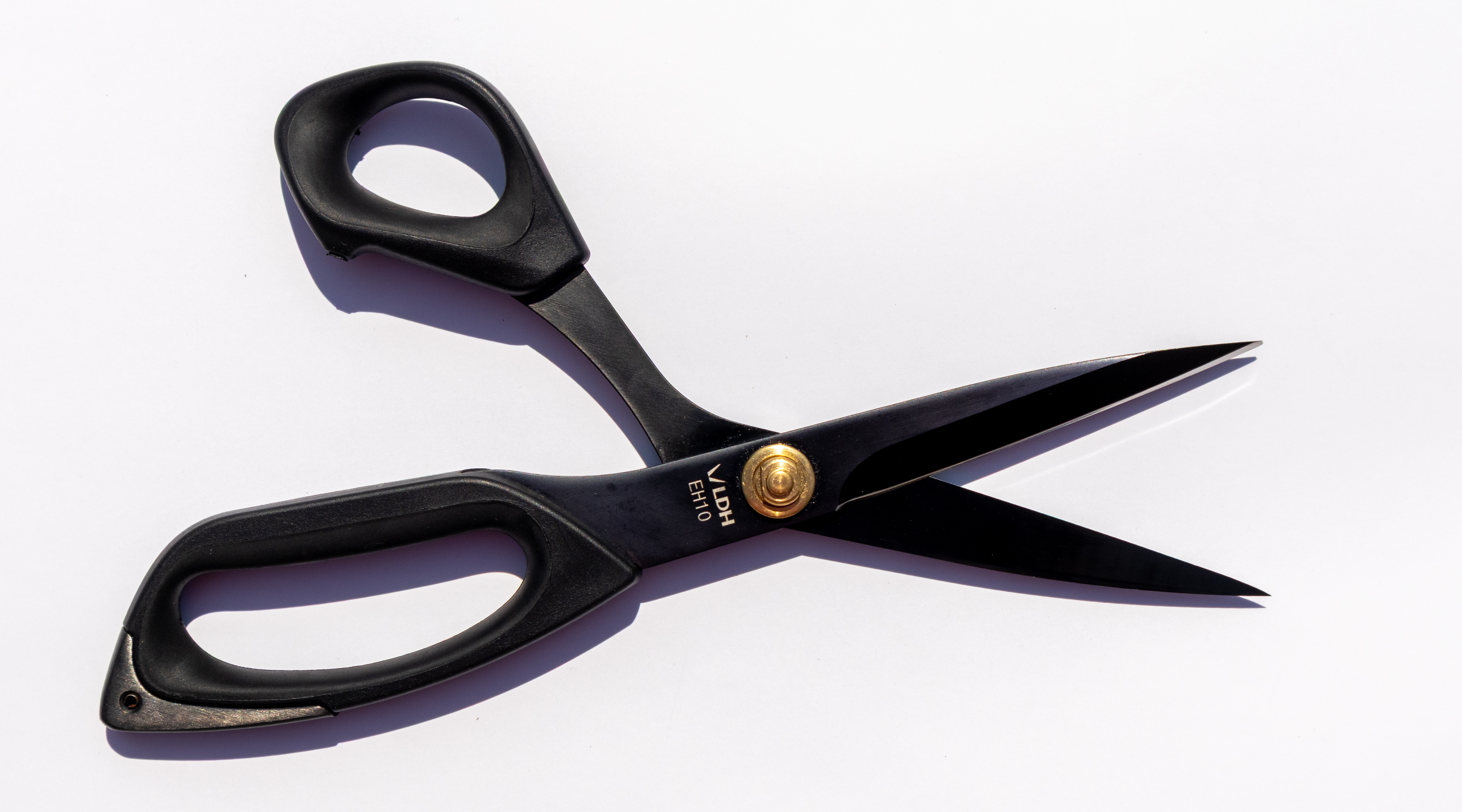
Many sewists are surprised to discover that larger scissors can sometimes feel easier to operate than smaller ones. Part of this comes down to leverage. Larger handles create more mechanical advantage, allowing you to generate cutting power with less effort.
This is especially important for sewists who:
- Experience hand fatigue
- Work on large quilting projects
- Cut heavier fabrics
- Spend long hours preparing pattern pieces
Sometimes the solution isn't more hand strength—it's a tool designed to work more efficiently with your hand.
Choosing the Right Handle for Your Needs
When evaluating fabric scissors, most people focus on sharpness first, but comfort should be equally important. A well-designed handle supports:
- Better control
- Improved precision
- Reduced fatigue
- Smoother cutting
- A more enjoyable sewing experience
The best scissors aren't simply the sharpest ones. They're the ones that fit your hand comfortably and allow you to cut with confidence, because at the end of the day, sewing isn't just about fabric and thread. It's about the experience of making, and the right handle can make that experience significantly more enjoyable, one cut at a time!
Leave a comment