


5 Tips for The Ultimate Scissor Care Guide

How to keep your sewing scissors sharp, smooth, and ready for every project
A new year brings fresh projects, fresh ideas, and usually a renewed promise to take better care of the tools that make our creativity possible.
If you’re anything like us, your scissors worked hard over the holidays. From gift sewing and last-minute makes to fabric marathons fueled by coffee and cozy playlists, your tools likely did a lot of heavy lifting. January is the perfect moment to reset, not just your sewing space, but your habits around tool care.
This ultimate scissor care guide is designed to help you protect your investment, extend the life of your tools, and make every cut feel as satisfying in December as it does in January. Whether you’re new to sewing or a seasoned maker, these tips will keep your scissors cutting smoothly all year long.
Why Scissor Care Matters More Than You Think
Quality scissors are designed to last, but even the best blades need proper care. Dull, sticky, or misaligned scissors don’t just slow you down, they can strain your hands, damage fabric, and make projects feel frustrating instead of fulfilling.
Good scissor care:
- Keeps blades sharp and aligned
- Prevents rust and residue buildup
- Reduces hand fatigue
- Protects delicate and expensive fabrics
- Extends the life of your tools by years
In other words, caring for your scissors is one of the simplest ways to elevate your entire making experience.
Use the Right Scissors for the Right Job
One of the most important habits for scissor longevity starts before you even make a cut.
Fabric scissors should only be used on fabric. Paper, cardboard, interfacing, and other non-fabric materials dull blades quickly and unevenly. Even one paper-heavy session can noticeably affect performance.
If you work across different mediums, keep dedicated tools for each task. Fabric shears for fabric, craft scissors for paper, thread snips for trimming. Your blades will thank you.
Keep Your Blades Clean and Dry
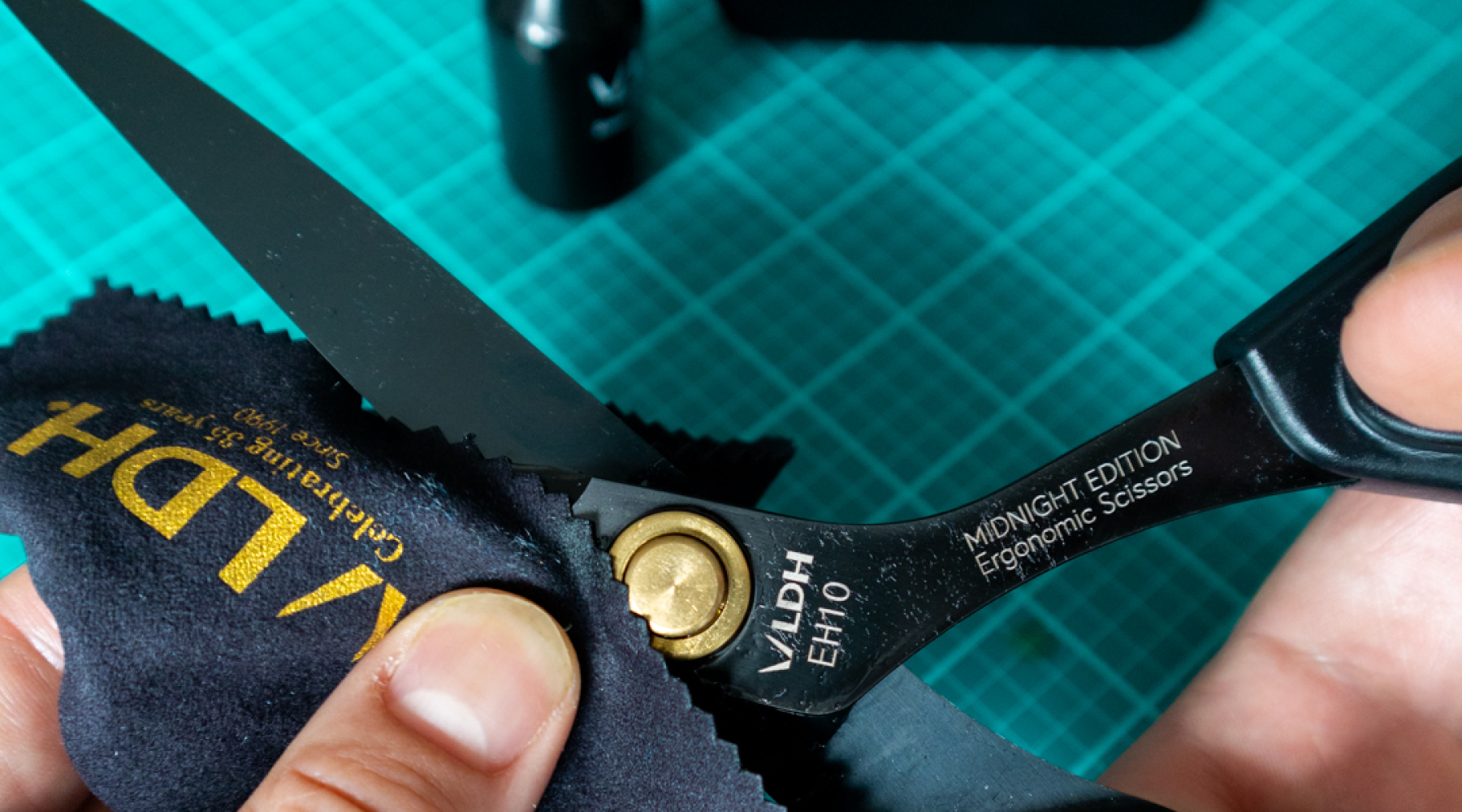
After long sewing sessions, especially with materials like fleece, denim, or batting, residue can build up on blades. Over time, this causes drag and uneven cutting.
A simple cleaning routine:
- Wipe blades gently with a soft, dry cloth after use
- For sticky residue, lightly dampen the cloth with rubbing alcohol
- Dry thoroughly before storing
Moisture is the enemy of steel. Always store scissors completely dry to prevent rust, especially in humid sewing spaces.
Oil Your Scissors (Yes, Really)
Oiling scissors is one of the most overlooked yet impactful care habits.
A drop or two of oil at the pivot point:
- Reduces friction
- Keeps blades opening and closing smoothly
- Prevents squeaking and stiffness
- Helps protect against rust
You don’t need to oil often, just when scissors feel tight or dry. Think of it as preventative care rather than a repair step.
Store Scissors Safely Between Projects
How you store your scissors matters almost as much as how you use them.
Best storage practices:
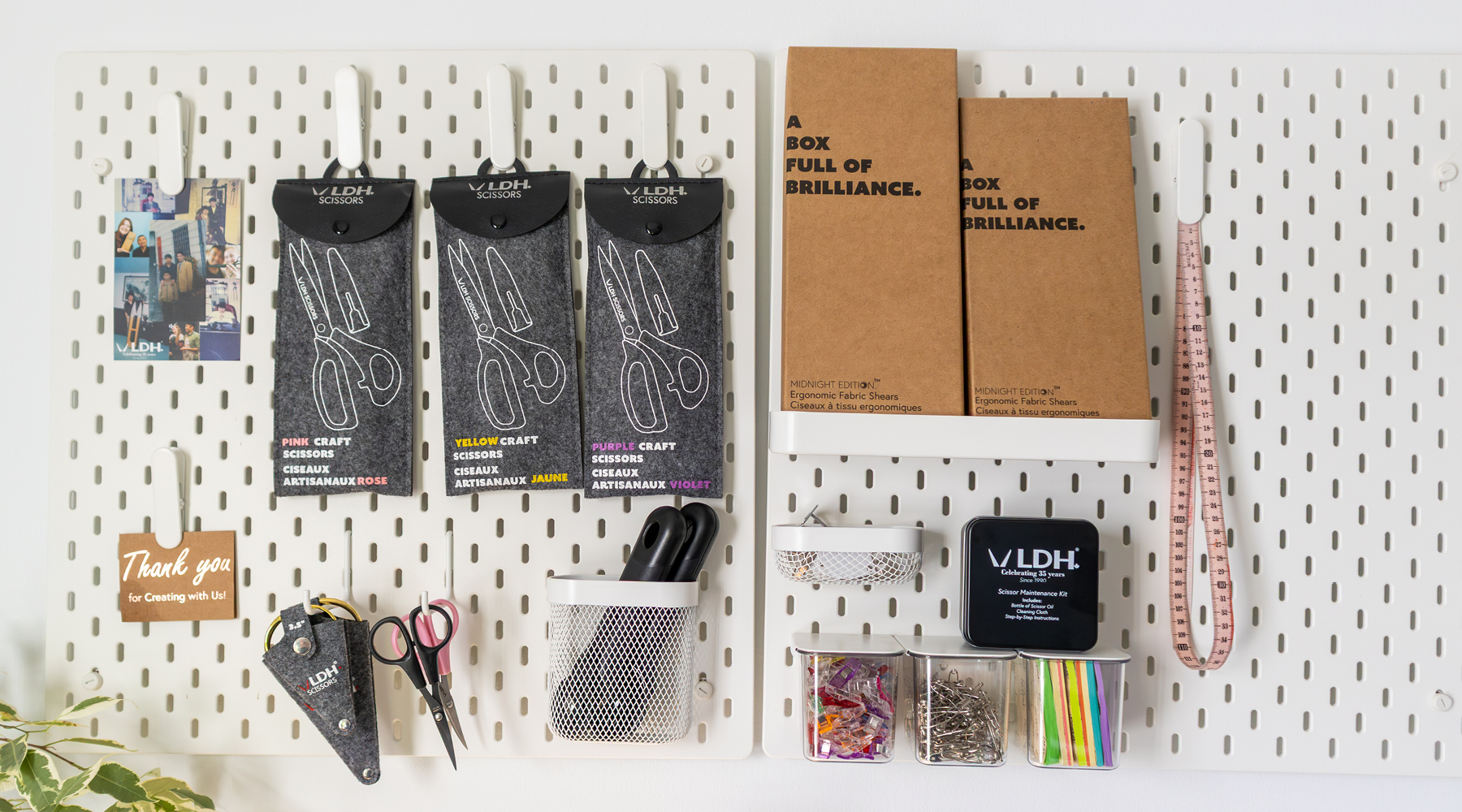
- Keep scissors closed when not in use
- Store in a sheath or case to protect blades
- Avoid tossing them loose into project bags
- Hang on a pegboard or place flat in a drawer
Proper storage protects the blade edge and prevents accidental drops, one of the fastest ways scissors lose alignment.
Sharpen When Needed, Not Too Late
Even with excellent care, scissors will eventually need sharpening. The key is not waiting until they’re completely dull.
Signs it’s time to sharpen:
- Fabric folds instead of cutting cleanly
- You feel resistance or dragging
- Cuts look jagged or uneven
High-quality scissors can be sharpened professionally multiple times over their lifespan, making them a long-term investment rather than a disposable tool.
A Simple Reset for the New Year
January is a great moment to check in with your tools:
- Wipe blades clean
- Add a drop of oil
- Inspect alignment
- Reassign scissors to the correct tasks
- Set up a storage system that works for you
Small habits add up, and these few minutes of care can transform how your tools perform all year long.
Meet the LDH Scissors Maintenance Kit
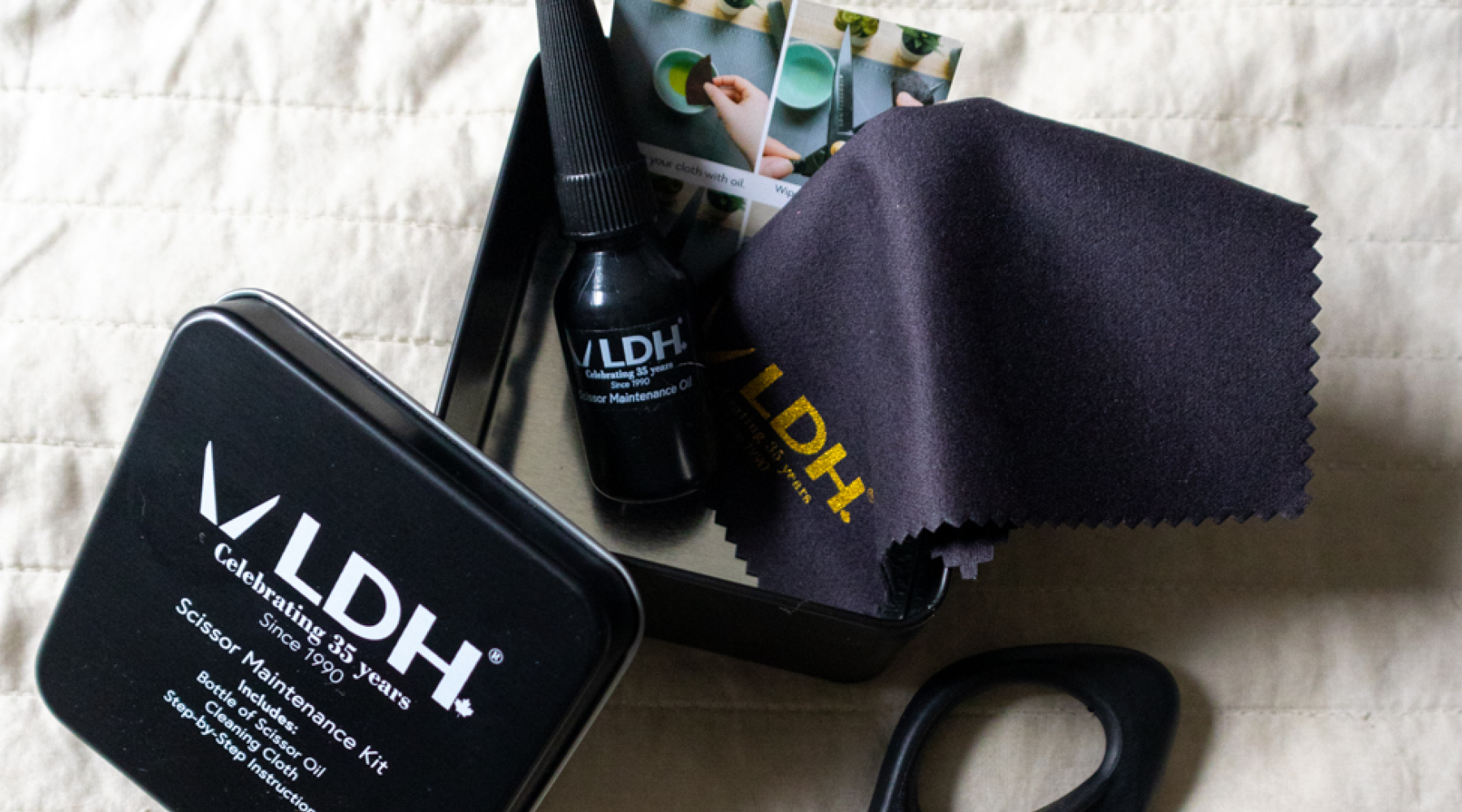
If you’re looking for an easy way to build better care habits, the LDH Scissors Maintenance Kit was designed to make scissor care simple, approachable, and effective.
The kit includes:
- Premium scissor oil for smooth, long-lasting movement
- A soft cleaning cloth for residue and moisture
- A step-by-step care guide to take the guesswork out of maintenance
It’s ideal for anyone who wants their scissors to feel brand new again, without complicated tools or processes. Whether you’re maintaining a single pair or an entire collection, the kit helps protect your tools and extend their lifespan with minimal effort.
Care for Your Tools, Care for Your Craft
Your scissors are more than just tools. They’re part of your creative rhythm, your workflow, and the joy you find in making.
By building small, intentional care habits into your routine, you’re not just maintaining metal and blades. You’re supporting your creativity, protecting your hands, and setting yourself up for smoother, more satisfying projects all year long.
Here’s to a year of sharp cuts, smooth movement, and tools that work as hard as you do!
Leave a comment